




Understand the biological and emotional keys behind your food choices and improve your relationship with food
We often believe that eating until we feel “full” is synonymous with having eaten well. However, true nourishment depends not only on how much we eat, but also on how we feel afterward. In this article, we explain the differences between satiety and satisfaction—two concepts that, although similar, have very different impacts on our health and well-being.
Arantxa Jiménez – Neolife Nutrition Unit
What Is Satiety?
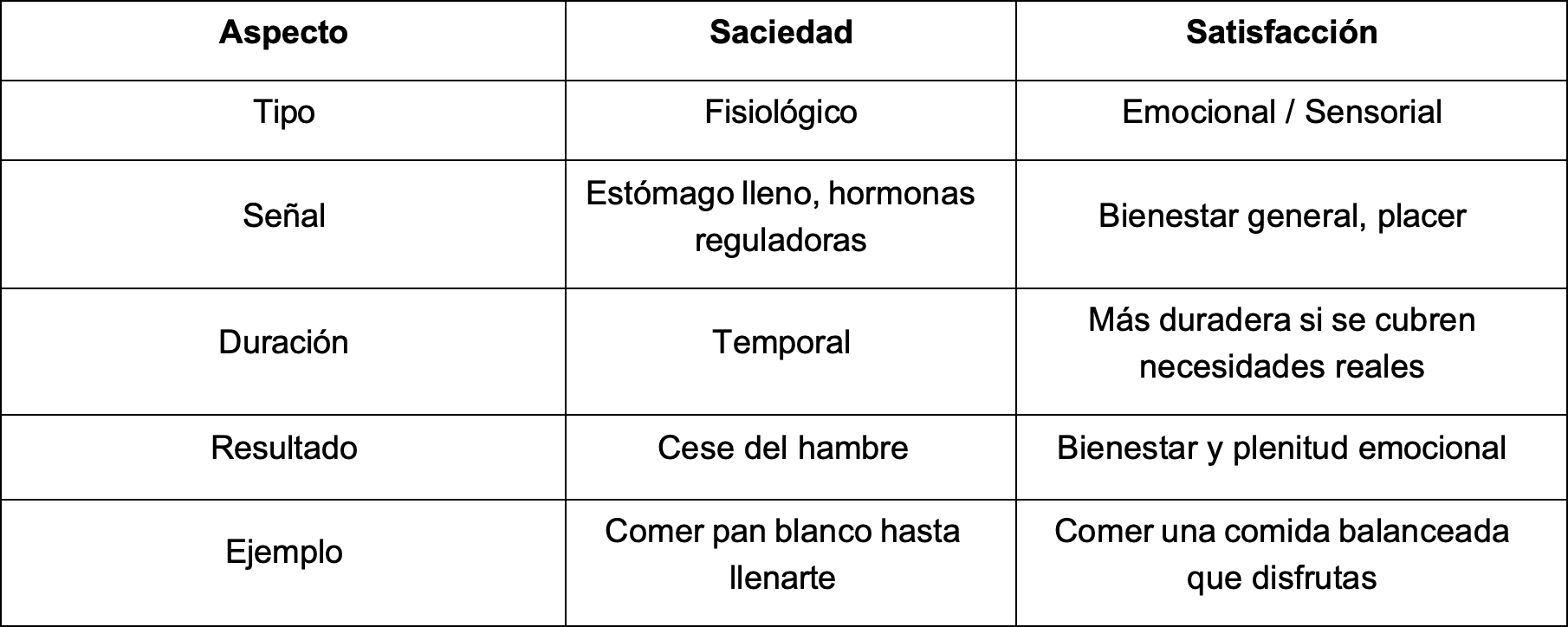
Satiety is a physiological response of the body that signals that the stomach is full and that, at least temporarily, no more food is needed. It is mainly regulated by hormones such as leptin, insulin, and cholecystokinin, which send signals to the brain to reduce appetite after food intake.
In simple terms, being satiated means no longer feeling physical hunger. This state can be achieved by eating large quantities of food, even if those foods are not particularly nutritious or enjoyable. For example, a meal high in refined carbohydrates may fill you up quickly, but it does not necessarily nourish you or provide satisfaction.

What Is Dietary Satisfaction?
Satisfaction, on the other hand, is a more subjective and emotional process. It involves feeling that what you ate was enjoyable, sufficient, and aligned with your real needs and desires. It relates to how you experience food—its flavor, texture, temperature, and even the environment in which you eat.
Feeling satisfied means that food has fulfilled a purpose beyond simply relieving hunger: it has been a pleasant and nourishing experience. This type of eating is often associated with a healthier relationship with food and can help prevent binge eating or subsequent emotional eating.

Key Differences Between Satiety and Satisfaction

Why Does This Difference Matter?
Understanding this distinction is essential for achieving intuitive and mindful eating. Eating solely to reach satiety can lead to automatic or restrictive eating patterns, while also seeking satisfaction allows for more balanced, sustainable, and pleasurable food choices.
Moreover, when meals are satisfying, individuals are more likely to respect internal hunger and fullness cues, which can help prevent emotional eating, constant snacking, or late-night binge episodes.
Tips for Achieving Both Satiety and Satisfaction When Eating
- Include all three macronutrients (carbohydrates, healthy fats, and protein) in your meals to promote sustained satiety.
- Listen to your body and learn to distinguish between true hunger and emotional or habitual eating.
- Make your meals a sensory experience: pay attention to flavor, aroma, texture, and your surroundings.
- Eat without guilt: food also serves emotional and social purposes.
- Plan meals you truly enjoy—eating well does not mean giving up pleasure.
BIBLIOGRAPHY
(1) Tribole, E., & Resch, E. (2020). Intuitive Eating: A Revolutionary Anti-Diet Approach. St. Martin’s Essentials.
(2) Montse Bradford. (2015). La alimentación emocional. Editorial Urano.
(3) Damasio, A. (2005). En busca de Spinoza: Neurobiología de la emoción y los sentimientos. Crítica.
(4) Rolls, B. J., & Hetherington, M. (1990). Sensory-specific satiety: Theoretical frameworks and central mechanisms. Appetite.
(5) Kristeller, J. L., & Wolever, R. Q. (2011). Mindfulness-Based Eating Awareness Training (MB-EAT): A clinical manual.