




Ultra-processed foods are not designed merely to nourish us: they are carefully engineered to make us want to keep eating. It is no coincidence that opening a bag of potato chips or a packet of cookies almost always ends with “just a little more,” until, before we realize it, the package is empty.
These products (snacks, sweets, fast food…) may seem harmless, but behind their intense flavor, perfect texture, and irresistible aroma lie hours of testing, formulas, and fine-tuning aimed at stimulating our senses and activating the brain’s reward system. What exactly do these foods contain that makes them so hard to stop eating? Why can a single bite turn into a chain of cravings? The answer lies in their design: a precise combination of ingredients, textures, and sensory stimuli that subtly encourages us to keep eating.
Adriana Martín Peral – Neolife Nutrition Unit
What Are Ultra-Processed Foods?
Ultra-processed foods are products that undergo multiple industrial transformations and contain a long list of ingredients you would not normally find in a home kitchen. Beyond basic components such as wheat, corn, or milk, they often include added sugars, low-quality fats, flavor enhancers, additives, and texturizers, all designed to improve taste, appearance, and shelf life. The goal of these processes is not only to extend the product’s durability but also to create a perfect texture, an intense flavor, and a pleasurable eating experience, all while keeping production costs low. This is why, although they may appear to be simple snacks or ready-to-eat meals, each bite involves food engineering designed to capture our attention and keep us eating for longer.
How Ultra-Processed Foods Create Cravings
It is no coincidence that it is so difficult to stop after opening a bag of chips or a packet of cookies. Ultra-processed foods are designed to activate the brain’s reward system, releasing dopamine and making each bite more appealing than the last. This is achieved through what experts call the “irresistible triad”: sugar, fat, and salt. The precise combination of these three elements is carefully calibrated to maximize pleasure without becoming overwhelming, stimulating the release of dopamine, the neurotransmitter associated with pleasure and motivation.
Added to this is the concept of the “bliss point,” which describes the exact level of sugar, fat, or salt that produces the greatest satisfaction. Companies conduct extensive sensory testing to find the perfect proportion, ensuring that each bite is highly pleasurable and difficult to abandon.

Moreover, the texture and aroma of these foods are engineered to reinforce pleasure. The perfect crunch of potato chips, the melt-in-your-mouth smoothness of chocolate, or the softness of certain industrial breads send signals of freshness and flavor to the brain, increasing the compulsion to eat more. Even the low satiety of many ultra-processed foods (due to their low fiber or protein content) contributes to the brain continuing to ask for “just a little more,” even when the stomach is already full.
Ultra-processed foods do not rely solely on sugar, fat, and salt. Aromas and flavor enhancers also play a role in making each bite more irresistible. Ingredients such as monosodium glutamate (MSG), artificial flavorings, and industrial aromas intensify taste so that the brain perceives the food as more flavorful than it truly is. These additives provide no nutritional value but deceive our senses, generating a sense of pleasure that encourages continued consumption. It is a small chemical and sensory trick that, combined with other factors, makes stopping extremely difficult.
Another key factor is that many ultra-processed foods generate low satiety, meaning we do not feel sufficiently full despite having consumed many calories. This is because they tend to be calorie-dense but poor in fiber and protein—nutrients that help regulate appetite. As a result, the brain continues to send signals of hunger or craving even after sufficient energy intake. This combination of low satiety and high sensory reward turns these foods into an almost automatic cycle of eating more, again and again.
Marketing and Environment: Induced Cravings
It is not only ingredients and sensory engineering that make ultra-processed foods hard to resist; marketing and environment also play a key role in generating cravings and impulsive purchases. Bright packaging colors, eye-catching designs, and noisy wrappers are carefully designed to capture attention and associate the product with fun or pleasure.
In addition, many of these products are sold in small portions that seem harmless, leading us to underestimate how much we are consuming. This psychological design makes opening a package far more tempting and easy to eat “without guilt,” even though you may end up consuming more than planned.
Targeted advertising further reinforces these habits—not only in children, but also in adults. Commercials, social media, and promotions associate these foods with happy moments, rewards, or indulgence, creating emotional connections that go beyond simple hunger.
Finally, strategic placement in stores and supermarkets increases impulsive consumption. Positioning snacks at eye level, near checkout counters, or in main aisles makes them almost impossible to ignore. Even if you go shopping for a single ingredient to cook, constant exposure to these products activates the desire to buy and consume them immediately.
Together, these marketing and environmental factors do not merely sell the product—they manipulate our cravings, reinforcing the habits that ultra-processed foods have already begun to create through taste and texture.
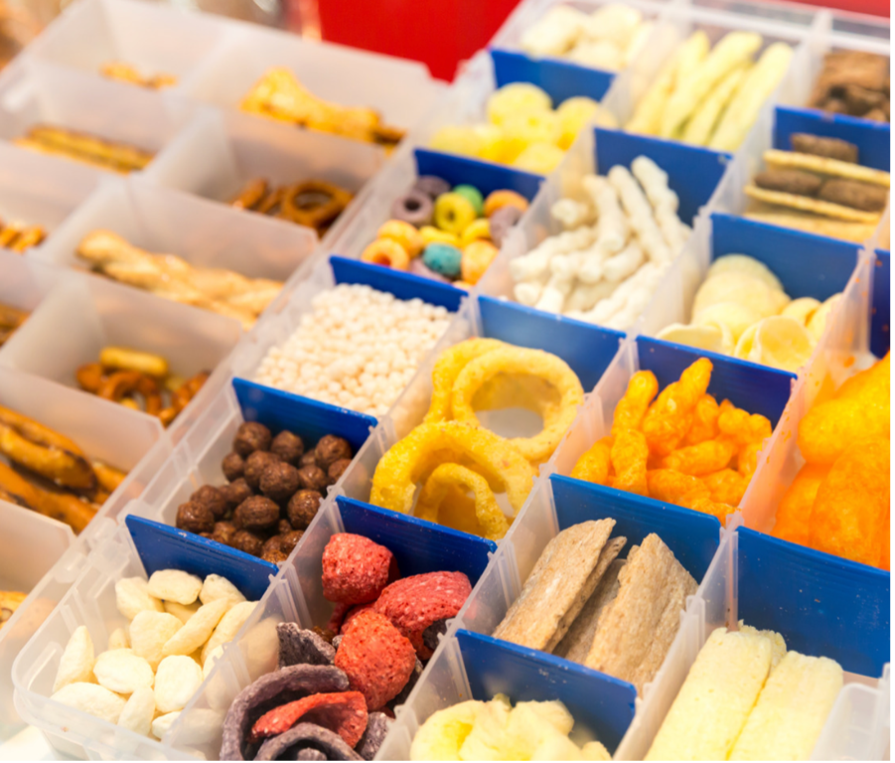
Practical Example: Why Potato Chips Crunch the Way They Do
The crunch of potato chips does not happen by chance; it is the result of careful sensory engineering. Brands specifically adjust sound and texture so that each bite is highly pleasurable and encourages continued eating.
1. The crunching sound stimulates the brain
The characteristic “crack” activates brain areas associated with pleasure and the perception of freshness. Noisy foods are perceived as fresher, newer, and more desirable, and companies calibrate the hardness and shape of the chips to make the sound as “perfect” as possible. Studies have shown that when the crunch is amplified, people rate chips as tastier, even if they are exactly the same product.
2. Extremely low moisture content
Potato chips are fried until they contain only about 1–2% moisture. This extreme dryness makes their structure fragile, breaking into small fractures when bitten and producing a highly satisfying crunch. With more moisture, they would become chewy or soggy and lose this effect.
3. Porous structure and trapped air
During frying, the water inside the potato rapidly turns into steam, creating small internal bubbles. This microcavity-filled structure causes the chip to break into many particles at once when bitten, producing a more complex and pleasant crunch.
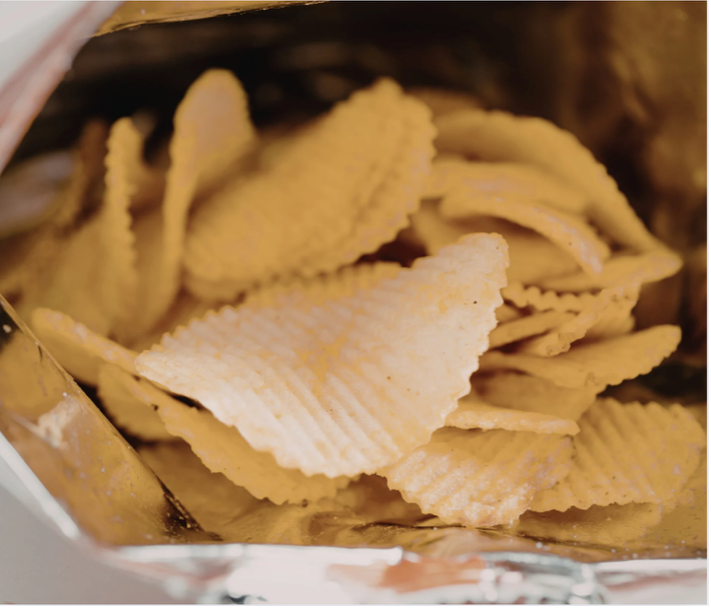
4. Fat and salt coating: the winning combination
The fat coating lubricates the mouth and enhances flavor, while salt intensifies taste and increases salivation. Together, fat and salt make the crunch more pronounced and the eating experience even more rewarding.
5. Crunch equals instant reward
The crunch reaches the ears milliseconds before the mouth perceives it, and the brain interprets it as “delicious.” This signal triggers a small dopamine release, reinforcing the habit of continuing to eat. That is why, even when we are full, sound and texture can push us to eat more than we need.
Conclusion
Ultra-processed foods are not simply foods: they are carefully designed products created to generate cravings. Their combination of flavor, texture, aroma, marketing, and low satiety activates brain reward circuits, creates automatic habits, and makes it difficult to stop—even when the body has already received enough energy. Understanding how these mechanisms work allows us to make more conscious choices and prioritize real foods most of the time, reducing the influence of strategies designed to keep us eating more.
BIBLIOGRAPHY
(1) Monteiro, C. A., Cannon, G., Lawrence, M., et al. (2019). Ultra-processed foods, diet quality, and health using the NOVA classification system. *FAO and Pan American Health Organizat
(2) SINC. Vinculan el consumo de ultraprocesados con síntomas depresivos y cambios en circuitos cerebrales. Agencia SINC. Agencia Sinc
(3) Sánchez Perona, J. “Los alimentos ultraprocesados se diseñan para ser muy apetitosos y fáciles de consumir”. Delegaciones CSIC. delegacion.andalucia.csic.es
(4) National Geographic. Alimentos ultraprocesados y su relación con la salud mental. National Geographic España
(5) El País. ¿Por qué los alimentos procesados son tan adictivos? Esta es la razón científica. Diario El País
(6) National Geographic. ¿Qué es más adictivo, la comida ultraprocesada o el tabaco? National Geographic España
(7) Lavanguardia. Entrevista con Claire Wilcox: “Alimentos con alto contenido en azúcar y ultraprocesados afectan al cerebro …”. La Vanguardia
(8) Business Insider (español). Ultraprocesados tan adictivos como el tabaco, según un nuevo estudio científico. Business Insider España
(9) El Economista. Por qué el cerebro es “adicto” a la comida ultraprocesada (y qué funciones puede alterar). El Economista
(10) El Tiempo. Los alimentos ultraprocesados serían dañinos para el cerebro, según estudio.