




You may not know that in Spain between one third and nearly half of adults have hypertension. This means that between 1 and 2 out of every 4 people suffer from high blood pressure, even though they may not be aware of it.
You may also be unaware—or not fully conscious—that, much like diabetes mellitus, arterial hypertension (HTN) is one of the main “silent killers” affecting our society. It often causes no symptoms, yet gradually damages our blood vessels and internal organs, increasing the risk of serious and potentially life-threatening complications. Every millimeter of mercury (the unit used to measure blood pressure) that is controlled represents time gained and health preserved. Would you like to understand why this is so?
Dr. Minguito – Neolife Medical Team
Risk factors
In part 1 of this article, we discussed what hypertension is and its consequences. In this second part, we will review risk factors and pharmacological treatment.
There are several risk factors that contribute to the development of arterial hypertension. Some cannot be changed, but others are within our control.
1. NON-MODIFIABLE RISK FACTORS
- Age
Blood pressure tends to increase with age because blood vessels gradually lose elasticity, hormonal changes affect fluid and salt balance, and the cumulative effects of unhealthy habits build up over time. While approximately 5–10% of women aged 20–44 have hypertension, prevalence rises dramatically to 85% in women aged 75 or older (comparable figures for men are 10–15% and 80%, respectively).

- Race
High blood pressure affects people of all races, but African Americans have a significantly higher risk of developing hypertension. African American women, in particular, have higher rates than men from other racial groups. For this reason, African Americans should begin monitoring their blood pressure and adopting healthy habits from a young age. Other racial groups have similar risk levels, although Asian women tend to have a lower risk. Despite this, many Hispanic and Asian individuals with hypertension are unaware of their condition and remain untreated, highlighting the importance of blood pressure monitoring for everyone.
- Family history and genetics
Having parents or close relatives with hypertension increases your risk, as approximately 50% of blood pressure variability is hereditary. More than 800 genetic variants influence blood pressure; although each has a small effect individually, their cumulative impact can accelerate the development of hypertension with age. Therefore, genetic predisposition requires regular monitoring and awareness of family history. Nevertheless, healthy lifestyle habits can offset a large part of this risk.
2. MODIFIABLE RISK FACTORS
Lifestyle modifications often provide effective, non-pharmacological ways to control or reduce blood pressure, sometimes with results comparable to medication. A large proportion of hypertension cases are due to an unhealthy diet (and associated obesity), lack of exercise, excessive alcohol consumption, or a combination of these factors.
- Obesity
One of the most effective lifestyle interventions for blood pressure control is weight loss. Excess body weight overloads the heart and promotes insulin resistance, both of which contribute to elevated blood pressure. Research shows a direct and consistent relationship between body mass index (BMI) and hypertension. Large studies suggest that obesity may account for 40–78% of hypertension cases.
Even modest weight loss can produce significant blood pressure reductions. A 2003 meta-analysis of 25 randomized clinical trials in overweight and obese adults found that for every kilogram of weight lost, systolic blood pressure decreased by approximately 1 mmHg and diastolic pressure by 0.92 mmHg.
Weight loss can be achieved through caloric restriction, intermittent fasting, or dietary changes, and the best approach depends on what is most sustainable for each individual.

- Dietary salt (sodium)
The relationship between dietary sodium, hypertension risk, and overall health is complex. Some individuals and groups are more sensitive to the blood-pressure-raising effects of salt. These include African Americans, older adults, people with diabetes, chronic kidney disease, or pre-existing hypertension. For these groups, sodium intake should be reduced, ideally to 2,000 mg per day or less.
Although organizations such as the American Heart Association recommend even lower limits (1,500 mg/day), it is important to note that excessively low sodium intake can also cause problems. Studies have shown that very low sodium consumption may be associated with headaches, mental status changes, lethargy, cramps, nausea, dehydration, and excessively low blood pressure, increasing the risk of falls and injuries in older adults. Therefore, moderate sodium reduction is advised for low-risk individuals, with more aggressive reduction reserved for those who are salt-sensitive.
In addition to reducing sodium, increasing potassium intake—a mineral essential for muscle function, kidney health, and blood vessel relaxation—can help lower blood pressure. In hypertensive adults, potassium intake can reduce systolic pressure by 3–6 mmHg and diastolic pressure by 1–4 mmHg. The sodium-to-potassium ratio appears to be more important than absolute intake levels. Foods rich in potassium, such as bananas, potatoes, and legumes, are especially beneficial for individuals with high salt intake.
- Exercise and blood pressure
Aerobic exercise is highly effective. A meta-analysis of clinical trials lasting at least four weeks found that aerobic training can reduce systolic blood pressure by up to 8 mmHg and diastolic pressure by at least 5 mmHg. The optimal dose is 90–150 minutes per week at 65–75% of maximum heart rate (the so-called “Zone 2”). At Neolife, we recommend at least three hours per week.
- Dynamic resistance training
Strength training may temporarily raise blood pressure during exercise, but in the long term it reduces systolic pressure by about 2 mmHg and diastolic pressure by 3 mmHg, when performed for 90–150 minutes per week using weights ranging from 50–100% of one-repetition maximum.
- Isometric resistance training (no weights)
This type of exercise has shown even greater reductions in systolic blood pressure—around 6 mmHg—and 3 mmHg in diastolic pressure, despite its seemingly low intensity.
- Alcohol
Current evidence shows that alcohol raises blood pressure in a dose-dependent manner. Genetic studies using Mendelian randomization confirm that even small amounts increase risk: each additional daily drink raises hypertension risk by 30%, and in heavy drinkers this risk can increase by up to 160%. There is no “safe” level of alcohol consumption for blood pressure. The good news is that reducing or stopping alcohol intake significantly lowers risk and improves cardiovascular health, even in former heavy drinkers.

3. OTHER FACTORS
- Sleep
Poor sleep—whether due to insufficient or excessive duration, or disorders such as insomnia, snoring, or sleep apnea—is associated with a higher risk of hypertension. Evidence shows a U-shaped relationship, with increased risk below 7 hours and above 9 hours of sleep. Optimizing sleep quality is essential; up to half of hypertension cases could potentially be managed without medication through lifestyle changes alone.
- Stress
Chronic stress is a major contributor to hypertension. Stress hormones such as cortisol increase heart rate and constrict blood vessels. Unhealthy coping mechanisms—overeating, smoking, or alcohol use—can further worsen blood pressure. Mindfulness, meditation, deep breathing, and physical activity are recommended strategies. Relaxation techniques and biofeedback have shown modest blood pressure reductions in some patients.
- Caffeine
Caffeine can temporarily raise blood pressure, particularly in people who do not consume it regularly. However, habitual consumption does not appear to cause sustained hypertension or increase long-term risk.

- Insulin resistance
Insulin resistance and type 2 diabetes significantly impact blood pressure by reducing nitric oxide bioavailability, impairing vasodilation and increasing vascular resistance.
Pharmacological treatment
As discussed, blood pressure control is a cornerstone in reducing cardiovascular disease, stroke, and kidney damage. Lifestyle modifications are the first-line approach, but when insufficient, pharmacological treatment becomes necessary.
Antihypertensive therapy must always be prescribed by a physician, who will select the most appropriate option based on individual characteristics and comorbidities.
There are four main first-line drug classes:
- Thiazide diuretics
- Calcium channel blockers
- Angiotensin-converting enzyme inhibitors (ACE inhibitors)
- Angiotensin II receptor blockers (ARBs)
All typically reduce systolic blood pressure by 12–15 mmHg and diastolic pressure by 9–11 mmHg.
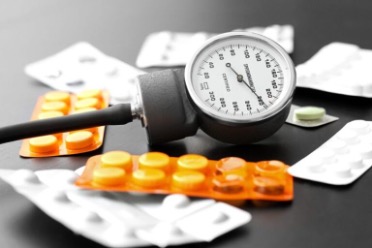
ACE inhibitors, for example, can reduce blood pressure by up to 12.5/9.5 mmHg. It is recommended to initiate treatment at half of the maximum dose to minimize the risk of adverse effects. ARBs (angiotensin II receptor blockers) offer similar efficacy but with fewer side effects. In many cases, they are even considered superior, although ACE inhibitors tend to be less expensive because they have been on the market longer.
When ACE inhibitors cause cough—a common side effect—patients can be easily switched to an ARB. Thiazide diuretics and calcium channel blockers are also effective, achieving reductions of up to 15/10 mmHg, but they are more frequently associated with adverse effects. For this reason, they are often used as adjunctive therapy, once treatment with ACE inhibitors or ARBs has been optimized. As always, treatment decisions must be individualized.
This raises an important question: are there factors that determine which medication is best for a particular individual? The answer is yes. The optimal choice of antihypertensive therapy is patient-specific and depends on the presence of comorbid conditions and tolerance to potential side effects. For example, most calcium channel blockers are contraindicated in heart failure with reduced ejection fraction, and thiazide diuretics are generally considered less appropriate for patients with diabetes or prediabetes, as they may worsen metabolic parameters. ACE inhibitors and ARBs are contraindicated during pregnancy, although they are generally associated with fewer adverse effects than calcium channel blockers and thiazide diuretics.
Summary
It is important to emphasize that while medications are often more effective than any single lifestyle intervention, the combined effect of multiple lifestyle improvements can match the benefits of pharmacological therapy.
At Neolife, we believe that blood pressure management is one of the most important pillars of longevity. It may not seem as glamorous as the latest anti-aging treatments, but it remains one of the most effective and well-established approaches in preventive medicine for reducing morbidity and mortality.
BIBLIOGRAPHY
(1) Banegas JR, Graciani A, López-García E, et al.
Prevalence, awareness, treatment and control of hypertension in Spain: results of a nationwide population-based study.
Rev Clin Esp (Barc). 2024;224(2):83–92.
Disponible en: PubMed.
(2) Rodríguez-Roca GC, Coca A, Barrios V, et al.
Guía práctica sobre el diagnóstico y tratamiento de la hipertensión arterial en España.
Hipertens Riesgo Vasc. 2022;39(4):155–170.
Disponible en: Elsevier.
(3) Camafort M, Gijón-Conde T, Segura J, et al; IBERICAN Study Group.
Prevalence and control of hypertension in primary care: results from the IBERICAN study.
Eur J Gen Pract. 2024;30(1):1–10.
Disponible en: PMC.
(4) Sociedad Española de Médicos de Atención Primaria (SEMERGEN).
Nota de prensa Día Mundial de la Hipertensión 2024.
SEMERGEN; mayo 2024. Disponible en: SEMERGEN PDF.
(5) Banegas JR, et al.
Prevalence of hypertension in Spain 2019: population-based nationwide study.
J Hypertens. 2024;42(3):431–440.
Disponible en: ScienceDirect.
(6) SPRINT Research Group; Wright JT Jr, Williamson JD, Whelton PK, et al.
A randomized trial of intensive versus standard blood-pressure control.
N Engl J Med. 2015;373(22):2103–2116.
doi:10.1056/NEJMoa1511939
(7) Zhang W, Zhang S, Deng Y, et al; STEP Study Group.
Trial of intensive blood-pressure control in older patients with hypertension.
N Engl J Med. 2021;385(14):1268–1279.
doi:10.1056/NEJMoa2111437
(8) Whelton PK, Carey RM, Aronow WS, et al.
2017 ACC/AHA/AAPA/ABC/ACPM/AGS/APhA/ASH/ASPC/NMA/PCNA guideline for the prevention, detection, evaluation, and management of high blood pressure in adults.
J Am Coll Cardiol. 2018;71(19):e127–e248.
(9) Neter JE, Stam BE, Kok FJ, Grobbee DE, Geleijnse JM.
Influence of weight reduction on blood pressure: a meta-analysis of randomized controlled trials.
2003;42(5):878–884.
(10) He FJ, Li J, Macgregor GA.
Effect of longer term modest salt reduction on blood pressure: Cochrane systematic review and meta-analysis of randomised trials.
2013;346:f1325.
(11) Huang L, Trieu K, Yoshimura S, et al.
Effect of dose and duration of reduction in dietary sodium on blood pressure levels: systematic review and meta-analysis of randomised trials.
2020;368:m315.
(12) Brouillard AM, Kraja AT, Rich MW.
Trends in dietary sodium intake in the United States and the impact of USDA guidelines: NHANES 1999–2016.
Am J Med. 2019;132(10):1199–1206.e5.
(13) Cornelissen VA, Smart NA.
Exercise training for blood pressure: a systematic review and meta-analysis.
J Am Heart Assoc. 2013;2(1):e004473.
(14) Carnethon MR, Gidding SS, Nehgme R, Sidney S, Jacobs DR Jr, Liu K.
Cardiorespiratory fitness in young adulthood and the development of cardiovascular disease risk factors.
2003;290(23):3092–3100.
(15) Kang DO, Lee DI, Roh SY, et al.
Reduced alcohol consumption and major adverse cardiovascular events among individuals with previously high alcohol consumption.
JAMA Netw Open. 2024;7(3):e244013.
(16) Miller PM, Anton RF, Egan BM, Basile J, Nguyen SA.
Excessive alcohol consumption and hypertension: clinical implications of current research.
J Clin Hypertens (Greenwich). 2005;7(6):346–351.
(17) Han B, Chen WZ, Li YC, Chen J, Zeng ZQ.
Sleep and hypertension.
Sleep Breath. 2020;24(1):351–356.
(18) Li H, Ren Y, Wu Y, Zhao X.
Correlation between sleep duration and hypertension: a dose-response meta-analysis.
J Hum Hypertens. 2019;33(3):218–228.
(19) Agras WS.
Behavioral approaches to the treatment of essential hypertension.
Int J Obes. 1981;5 Suppl 1:173–181.
(20) Kennedy MD, Galloway AV, Dickau LJ, Hudson MK.
The cumulative effect of coffee and a mental stress task on heart rate, blood pressure, and mental alertness in caffeine-naïve and caffeine-habituated females.
Nutr Res. 2008;28(9):609–614.
(21) Steffen M, Kuhle C, Hensrud D, Erwin PJ, Murad MH.
The effect of coffee consumption on blood pressure and the development of hypertension.
J Hypertens. 2012;30(12):2245–2254.
(22) Kim JA, Montagnani M, Koh KK, Quon MJ.
Reciprocal relationships between insulin resistance and endothelial dysfunction: molecular and pathophysiological mechanisms.
2006;113(15):1888–1904.
(23) Medrano MJ, Cerrato E, Boix R, Delgado-Rodríguez M.
Cardiovascular risk factors in Spanish population: metaanalysis of cross-sectional studies.
Med Clin (Barc). 2005;124(16):606–12. doi:10.1157/13074389.
(24) Tormo MJ, Navarro C, Chirlaque MD, Pérez-Flores D.
Prevalence and control of arterial hypertension in the South-East of Spain: a radical but still insufficient improvement.
Eur J Epidemiol. 1997;13(3):301–8. doi:10.1023/A:1007341404633.
(25) Gutiérrez-Misis A, Sánchez-Santos MT, Banegas JR, et al.
Prevalence and incidence of hypertension in a population cohort of people aged 65 years or older in Spain.
J Hypertens. 2011;29(10):1863–70. doi:10.1097/HJH.0b013e32834ab497.