


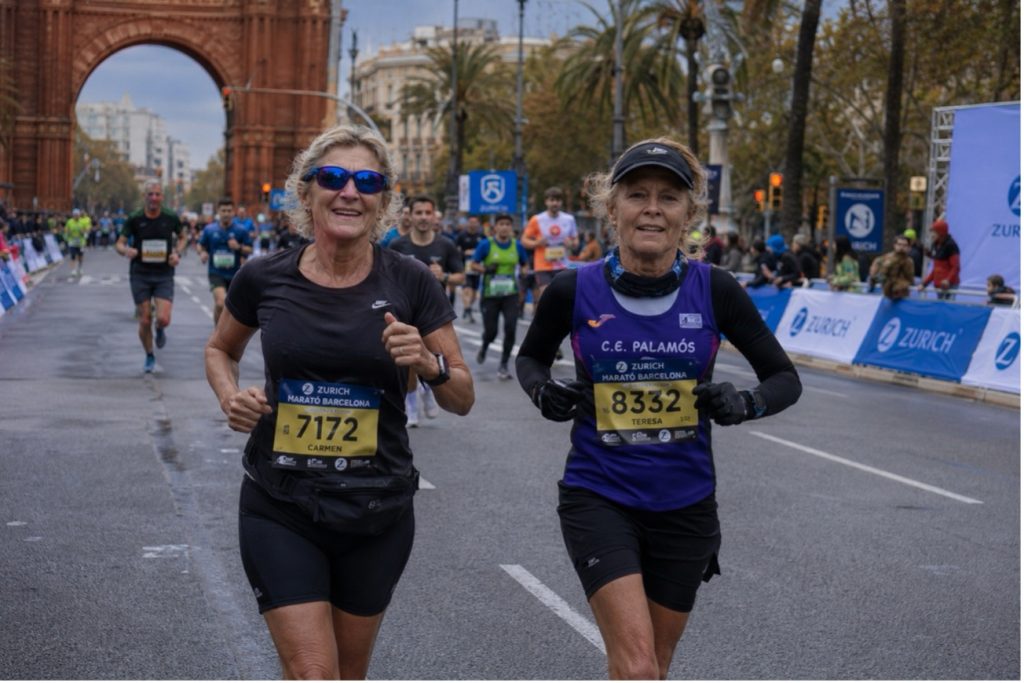

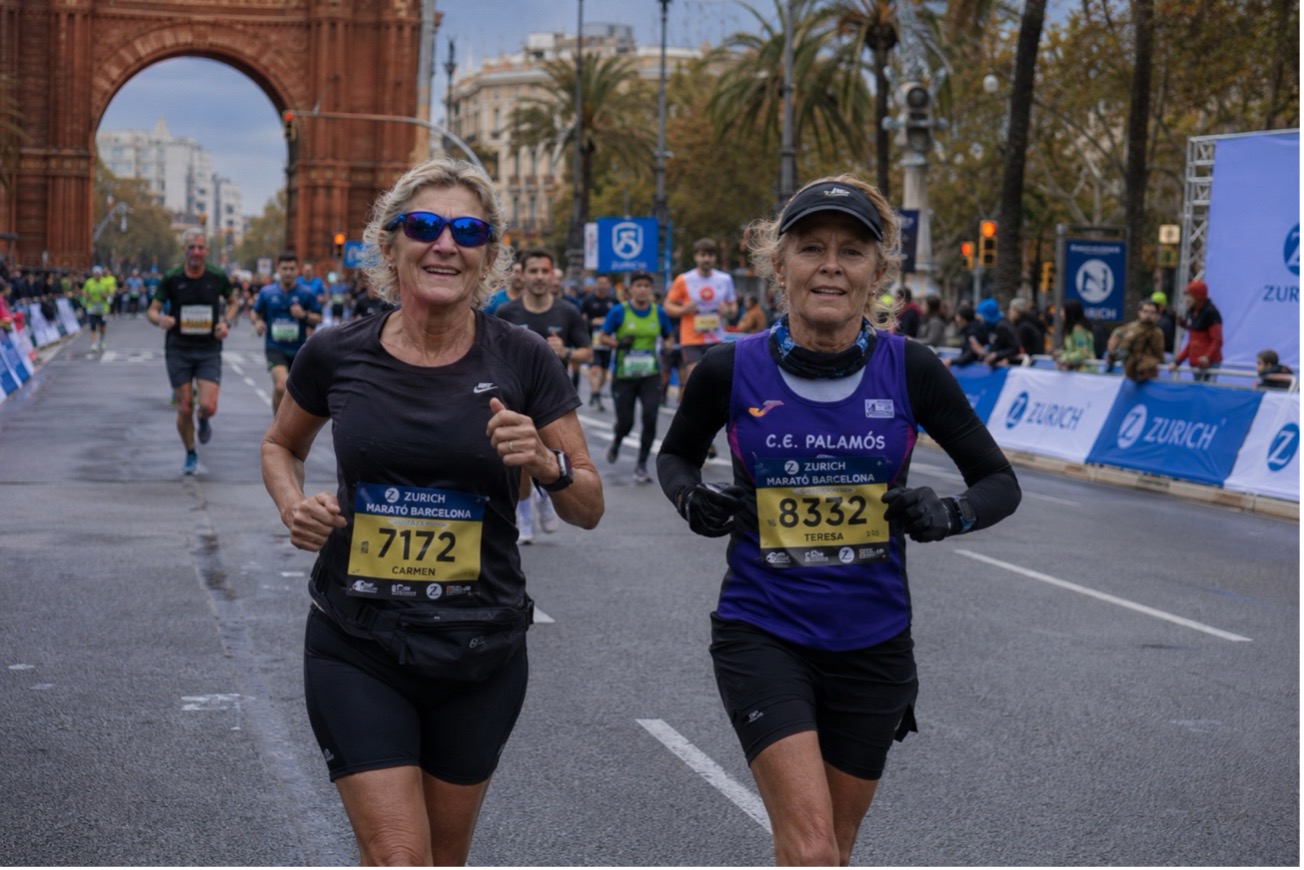
One of the most widely discussed studies in recent preventive cardiology, involving first-time runners in the London Marathon, examined how six months of training affected aortic health.
The study, published in the Journal of the American College of Cardiology and funded by the British Heart Foundation, included 138 runners and showed that marathon preparation reduced aortic stiffness and central blood pressure. Participants achieved arterial rejuvenation equivalent to approximately four years, with the greatest benefits observed in those who began with poorer physical fitness.
Dr. Carlos Martí – Neolife Medical Team
The aorta: the forgotten shock absorber of the circulatory system
When cardiovascular health is discussed, attention usually focuses on the heart or on specific arteries such as the coronary arteries. The aorta tends to remain in the background despite being the body’s largest artery and being responsible for a little-known but essential function: cushioning the force of each heartbeat. In a young person, its wall is elastic thanks to the elastin fibers that compose it, and it expands and recoils with every contraction of the heart, transforming a pulsatile flow into a much more uniform one before it reaches the rest of the body.
With age, that elastin is gradually degraded and replaced by collagen, a much stiffer protein. The aorta loses its cushioning capacity, the pressure generated by each heartbeat reaches the brain, heart, and kidneys with greater force, and this ongoing mechanical wear underlies much of the increased risk of hypertension, stroke, and heart failure associated with aging, even in the absence of other identifiable risk factors.
The most surprising finding: the poorer the starting fitness, the greater the benefit
When the results were analyzed by subgroup, a pattern emerged that overturns the usual intuition about exercise and age: vascular rejuvenation was not greatest in the youngest or fastest runners, but rather in the older participants and those with slower finishing times. The stiffer the aorta was at the beginning of the study, the greater the improvement observed after six months of training.
The authors’ interpretation was clear and, for any sedentary person considering starting exercise after the age of 50 or 60, quite encouraging: the cardiovascular system retains a substantial capacity for adaptation throughout much of adult life, and one does not need to have been an athlete to benefit. In fact, the margin for improvement is often greatest precisely in those who start from a less favorable baseline.
How vascular age is measured today: from the research laboratory to the clinic
In the original study, aortic stiffness was measured using cardiovascular magnetic resonance imaging, a highly precise technique that, because of its cost and availability, is largely confined to research settings. To bring the same concept into clinical practice, the reference tool is pulse wave velocity (PWV): the speed at which the pressure wave generated by each heartbeat travels through the arteries. A stiffer arterial wall transmits that wave more quickly, making an elevated PWV an independent predictor of cardiovascular risk beyond traditional risk factors.
Devices such as SphygmoCor can obtain this measurement non-invasively using a blood-pressure cuff on the arm or tonometry sensors placed over the radial and femoral arteries, reconstructing the central aortic pressure waveform without any invasive procedure. This turns something that previously could only be estimated indirectly into an objective, reproducible measurement: a true snapshot of the biological age of the arterial system, useful both for detecting accelerated vascular aging and for assessing whether an intervention such as a training program is working.
What endurance exercise does that a drug cannot fully replicate
The mechanism behind this improvement is not a single factor but the sum of several. Sustained endurance exercise increases shear stress on the endothelium, the inner lining of blood vessels, which stimulates the production of nitric oxide, a molecule central to the arteries’ ability to relax and remain elastic. Added to this are the well-documented effects of aerobic exercise: lower blood pressure, improved lipid profile, reduced low-grade inflammation, and greater insulin sensitivity.
What this study contributed was not the discovery that exercise improves vascular health—that has been known for years from supervised laboratory training programs—but the demonstration that the same benefit can be achieved through real-world training, without clinical supervision and at moderate intensity, the kind of program followed by anyone who decides to run a first marathon.
From evidence to practice: what this means for someone starting from zero
Translated into a realistic plan, the training pattern followed by the study participants did not require becoming a competitive distance runner: gradual progression of training volume over several months, three to five sessions per week combining easy continuous running with some more demanding work, and consistency maintained over time. The reported benefit was achieved after six months of preparation, not through isolated efforts or occasional high-intensity sessions.
In sedentary individuals, in those with pre-existing cardiovascular risk factors, or in adults over 45–50 years of age, it is advisable to begin with a medical evaluation that includes basic cardiovascular screening before starting a program of this type. Knowing a patient’s true vascular age at baseline, rather than relying solely on a single blood-pressure reading taken in the office, provides much more comprehensive information and also allows objective monitoring of progress as training advances.
As always, the Neolife approach
This study illustrates a central idea in preventive and longevity medicine: biological age does not always match the age printed on an ID card, and much of that difference depends on modifiable factors. At Neolife, our preventive checkups include the assessment of cardiovascular biomarkers, including indicators of arterial stiffness, precisely to understand each patient’s true baseline beyond a blood-pressure number measured at a single moment.
Based on that assessment, we design personalized follow-up programs that combine exercise prescription, nutrition, and medical intervention when necessary, with the aim of addressing the aspects of vascular aging that can be modified. The study by Bhuva and Manisty leaves a simple message that is easy to apply: sometimes, the path toward a younger aorta begins with setting a first goal, no matter how distant it may seem at the start.
BIBLIOGRAPHY
(1) Bhuva AN, D’Silva A, Torlasco C, Jones S, Nadarajan N, Van Zalen J, et al. Training for a First-Time Marathon Reverses Age-Related Aortic Stiffening. J Am Coll Cardiol. 2020;75(1):60-71. doi: 10.1016/j.jacc.2019.10.045.
(2) University College London Hospitals Biomedical Research Centre. Training for first-time marathon “reverses” ageing of blood vessels. Comunicado de prensa, mayo de 2019.
(3) Townsend RR, Wilkinson IB, Schiffrin EL, et al. Recommendations for Improving and Standardizing Vascular Research on Arterial Stiffness: A Scientific Statement From the American Heart Association. Hypertension. 2015;66(3):698-722.
(4) Butlin M, Qasem A. Large Artery Stiffness Assessment Using SphygmoCor Technology. Pulse (Basel). 2017;4(4):180-192.