




The COSMOS study provides new evidence on the role of multivitamin supplements in healthy adults, after years of debate about their benefits.
The finding that has attracted the most attention was not related to the heart or cancer, but to the brain: taking a daily multivitamin significantly reduced age-related cognitive decline across three independent study groups. This is not definitive evidence, but it is the strongest evidence to date on the impact of this type of supplementation on brain health.
Dr. Carlos Martí – Neolife Medical Team
A Study Designed to Provide Answers, Not More Questions
COSMOS was designed at Harvard and led by Drs. JoAnn Manson and Shari Bassuk. More than 21,000 people over the age of 60 participated for almost four years: half took a daily multivitamin, while the other half took a placebo containing no active ingredients. Neither the participants nor the physicians responsible for follow-up knew which group they belonged to, eliminating the influence of expectations on the results.
What makes COSMOS particularly valuable in the field of brain health is that the same question was investigated in three different groups using different methods: one completed memory tests by telephone each year (COSMOS-Mind, more than 2,200 participants), another completed them online (COSMOS-Web, more than 3,500 participants), and a third group underwent detailed in-person assessments (COSMOS-Clinic, nearly 600 participants). The fact that all three reached the same conclusion is what makes this study more than just an isolated finding.
What They Found: Memory Improved and Cognitive Decline Slowed
Across all three groups, people who took the multivitamin daily performed better on tests of memory and mental agility than those who took the placebo. The most frequently cited finding is that, in COSMOS-Mind, the multivitamin appeared to delay cognitive aging by approximately 1.8 years over a three-year follow-up period, equivalent to slowing cognitive decline by around 60%.
The authors themselves are clear: the study has not demonstrated that a multivitamin prevents Alzheimer’s disease or reverses existing cognitive decline. What the results suggest is that it may act as a protective factor during the years before cognitive decline becomes noticeable. And that is precisely the stage at which there is still the greatest opportunity to intervene.

Why the Brain May Respond Better Than the Heart
Previous studies involving tens of thousands of participants have investigated the effects of multivitamins on heart disease and cancer, without finding clear results. The brain appears to be a different case, and the reason is fairly intuitive: it is the body’s most energy-demanding organ and one of the organs that relies most heavily on vitamins to function properly on a daily basis.
As we age, the absorption of some vitamins gradually becomes more difficult, while our needs do not necessarily decrease. A daily multivitamin could help fill the nutritional gap that even a reasonably varied diet does not always cover. COSMOS is the first large-scale study to provide real-world data—not just theoretical arguments—in support of this idea.
What the Study Does Not Say (and What You Should Know)
The results are real, but they should be interpreted in context. The multivitamin used in COSMOS was a standard generic product, so the study cannot determine which specific vitamins were responsible for the effect, nor whether a formulation containing higher-quality ingredients would have produced better or worse results.
We also do not know whether the benefit persists beyond the three-year follow-up period, or whether it applies equally to people aged 45 and those aged 70. And although the observed difference was consistent, it was not enormous in everyday life: we are not talking about restoring the memory someone had twenty years ago, but rather about a protective effect that accumulates over time and makes much more sense as a sustained habit than as an effect that can be noticed from one day to the next.
A Multivitamin Foundation as Part of a Longevity Program: The Role of NeoVitamin Plus
The practical conclusion from COSMOS is not that everyone should take a multivitamin. Rather, it suggests that in middle-aged and older adults whose diets are not always optimal, a daily vitamin foundation may have a favorable benefit-risk profile and, for the first time, solid experimental evidence supporting its potential role in cognitive health. This is precisely the type of intervention that makes sense within a preventive longevity program, where the goal is not to treat a disease but to preserve function before it begins to decline.
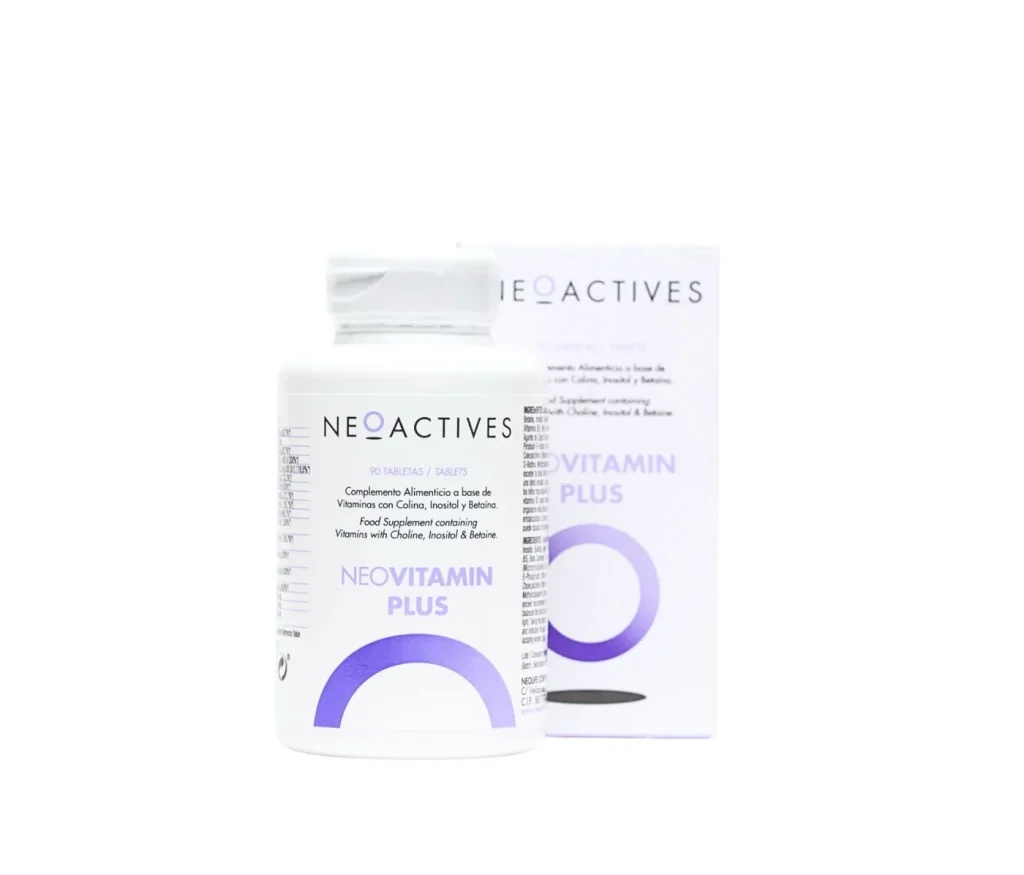
At Neolife, we use NeoVitamin Plus as a vitamin foundation within this context. Its formulation includes B vitamins involved in homocysteine regulation (B6, active-form B12, folate, and betaine), antioxidant vitamins C and E, and nutrients such as choline, which are less common in standard multivitamin formulations. The study does not support any specific formulation, but the mechanisms highlighted by COSMOS are precisely those addressed by NeoVitamin Plus in the design of its formula. Because if there is one thing this trial makes clear, it is that the brain, like the rest of the body, is better cared for before it starts asking for help.
BIBLIOGRAPHY
(1) Yeung LK, Alschuler DM, Wall M, Luttmann-Gibson H, Copeland T, Hale C, et al. Multivitamin supplementation improves memory in older adults: a randomized clinical trial. Am J Clin Nutr. 2023;118(1):273-282. doi: 10.1016/j.ajcnut.2023.05.011. [COSMOS-Web]
(2) Vyas CM, Manson JE, Sesso HD, Cook NR, Moorthy MV, Buring JE, et al. Effect of multivitamin-mineral supplementation versus placebo on cognitive function: results from the clinic subcohort of the COSMOS randomized clinical trial and meta-analysis of 3 cognitive studies within COSMOS. Am J Clin Nutr. 2024;119(3):692-701. doi: 10.1016/j.ajcnut.2023.12.011. [COSMOS-Clinic + metáanálisis]
(3) Manson JE, Bassuk SS, Cook NR, et al. COSMOS (COcoa Supplement and Multivitamin Outcomes Study): design and baseline characteristics of a randomized controlled trial. Contemp Clin Trials. 2020;94:106033. doi: 10.1016/j.cct.2020.106033.