




Minerals are involved in thousands of essential biological processes, including energy production, immune function, muscle health and healthy aging. Are we really meeting our needs?
The most reasonable approach is to start with a varied, high-quality diet and use supplementation on an individualized basis when there is insufficient intake, increased demand, or a clinical context that justifies it. NeoMineral Plus is a combination of minerals and trace elements in highly bioavailable forms, designed as a multimineral foundation within a comprehensive preventive medicine and longevity strategy.
Dr. Mercè Triviño – Neolife Medical Team
Minerals: Essential for Health and Aging
When we think about nutrition and health, the focus is usually on proteins, carbohydrates, healthy fats or vitamins. However, there is another group of micronutrients that is equally crucial to the body’s functioning and yet, paradoxically, often receives far less attention: minerals.
Although they are required in relatively small amounts, minerals are essential for virtually every cell in the body to perform its functions. They act as cofactors in enzymatic reactions involved in energy production, protein synthesis, muscle and nerve function, regulation of the immune response and protection against oxidative damage.
In recent years, growing interest in preventive medicine and Healthy Aging has shifted the focus towards a concept that goes beyond preventing deficiency diseases. The goal is to preserve biological function, maintain functional capacity and promote a good quality of life for as long as possible.
In this context, minerals play an important role. They are involved in processes closely related to aging, including mitochondrial function, energy metabolism, oxidative balance, immune response and the maintenance of muscle and bone mass. However, it is important to distinguish between the physiological importance of a nutrient and the existence of clinical evidence supporting its supplementation as a longevity intervention.
Why Are Minerals So Important?
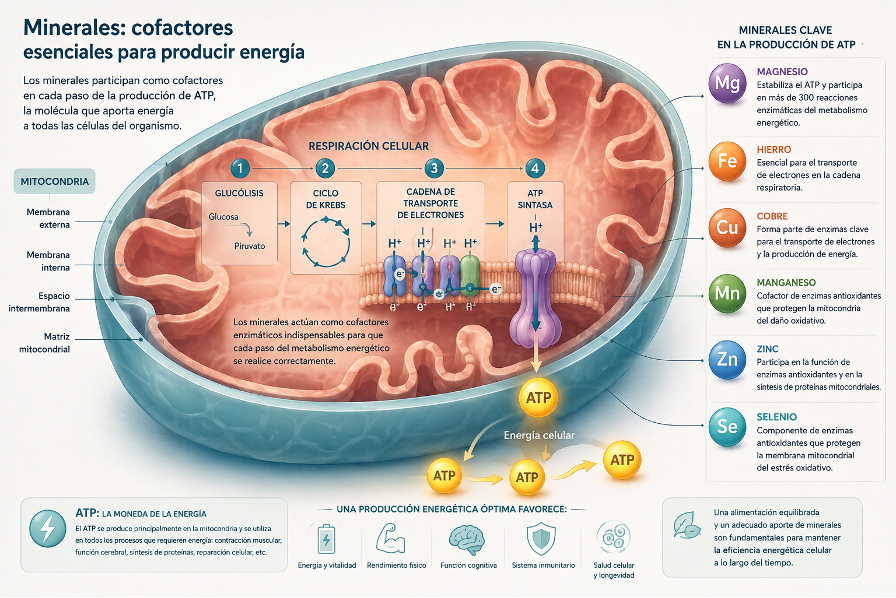
Minerals act as key facilitators of metabolism. Many function as cofactors or structural components of enzymes and proteins that are essential for life.
One of the most representative examples is the mitochondrion, the organelle responsible for producing much of the ATP used by our cells. Magnesium participates in ATP metabolism and numerous energy-producing reactions; iron forms part of proteins involved in electron transport; and copper is involved in essential enzymes within the respiratory chain. Other minerals, such as manganese, zinc and selenium, contribute to antioxidant defense systems.
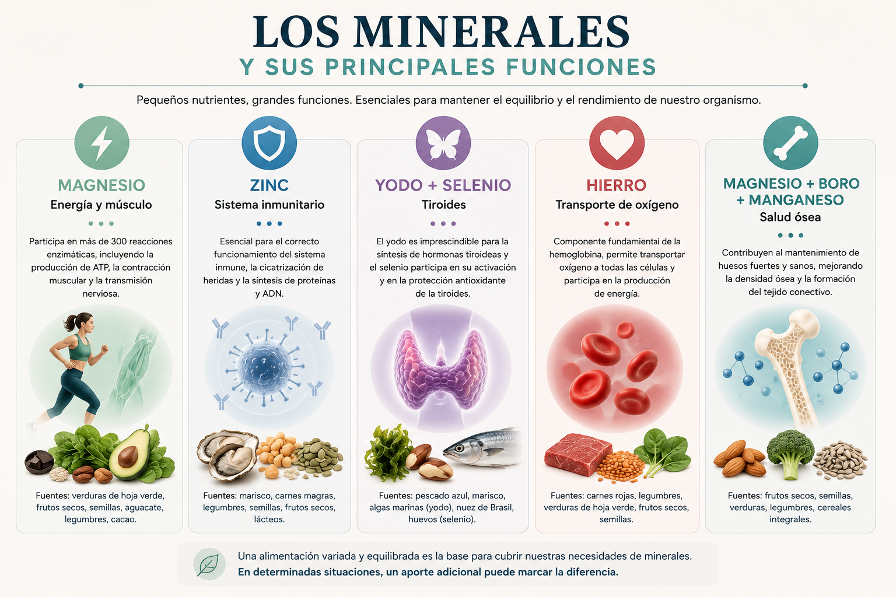
The importance of minerals goes beyond energy production. Zinc contributes to immune function, protein synthesis and tissue repair. Selenium forms part of selenoproteins involved in antioxidant defense and thyroid metabolism. Iodine is essential for the synthesis of thyroid hormones, while iron enables oxygen transport and contributes to energy metabolism.
Therefore, talking about minerals means talking about a metabolic network. Not all minerals have the same level of evidence, nor do they all require supplementation, but adequate availability is necessary for multiple physiological processes to function properly.
Minerals and Healthy Aging: Much More Than Preventing Deficiencies
For years, clinical nutrition has focused largely on preventing deficiency diseases. Longevity medicine has introduced a complementary approach: preserving biological function and reducing factors that may accelerate the loss of functional capacity.
Within this framework, minerals can contribute to maintaining fundamental physiological processes. Mitochondrial function depends on multiple cofactors; antioxidant systems require minerals such as zinc, selenium, copper and manganese; and thyroid function depends on adequate availability of iodine and selenium.
Muscle mass and bone health are equally relevant. Aging is accompanied by a progressive loss of muscle mass and function, as well as changes in bone metabolism. Magnesium contributes to muscle and bone function, while other minerals are involved in processes related to connective tissue and mineral metabolism. However, a multimineral supplement does not replace interventions with stronger evidence for preserving function: strength training, adequate protein intake, vitamin D when indicated, and a healthy diet.
Something similar applies to immunity and inflammaging, the chronic low-grade inflammation associated with aging. Zinc and selenium are important for immune function and antioxidant defense. However, maintaining adequate intake does not mean that high-dose supplementation will prevent aging or extend lifespan.
This distinction is fundamental. Nutritional optimization may be reasonable when there is insufficient intake, increased requirements or factors that impair absorption. However, physiological plausibility should not be turned into claims of anti-aging effects that have not yet been clinically demonstrated.
Does a Multimineral Supplement Make Sense?
Mineral supplementation is often focused on a single nutrient: magnesium for certain muscle-related symptoms, iron in the presence of a documented deficiency, or zinc in specific situations. This approach may be the most appropriate when there is a specific need. However, in preventive medicine, the goal may be different: improving overall mineral coverage in selected individuals.
Minerals do not act in isolation. Energy production, antioxidant defense, thyroid function and other processes depend on several cofactors. Therefore, a balanced multimineral formulation may make sense as a nutritional foundation when diet or clinical circumstances make inadequate mineral intake more likely.
The quality of the formulation is essential. It is not enough to include a large number of minerals: they should be selected in forms with good bioavailability, provided in functional amounts, and unnecessary or duplicative intake should be avoided. In addition, the presence of iron, iodine, selenium and chromium means that the indication should be individualized.
Therefore, a multimineral supplement should not be understood as a universal treatment for deficiencies. Its role is to provide nutritional coverage and optimization, particularly in people with low nutrient-density diets, increased nutritional demands, middle-to-older age, sustained stress or certain pharmacological treatments.
NeoMineral Plus: A Formulation Designed Around Physiology
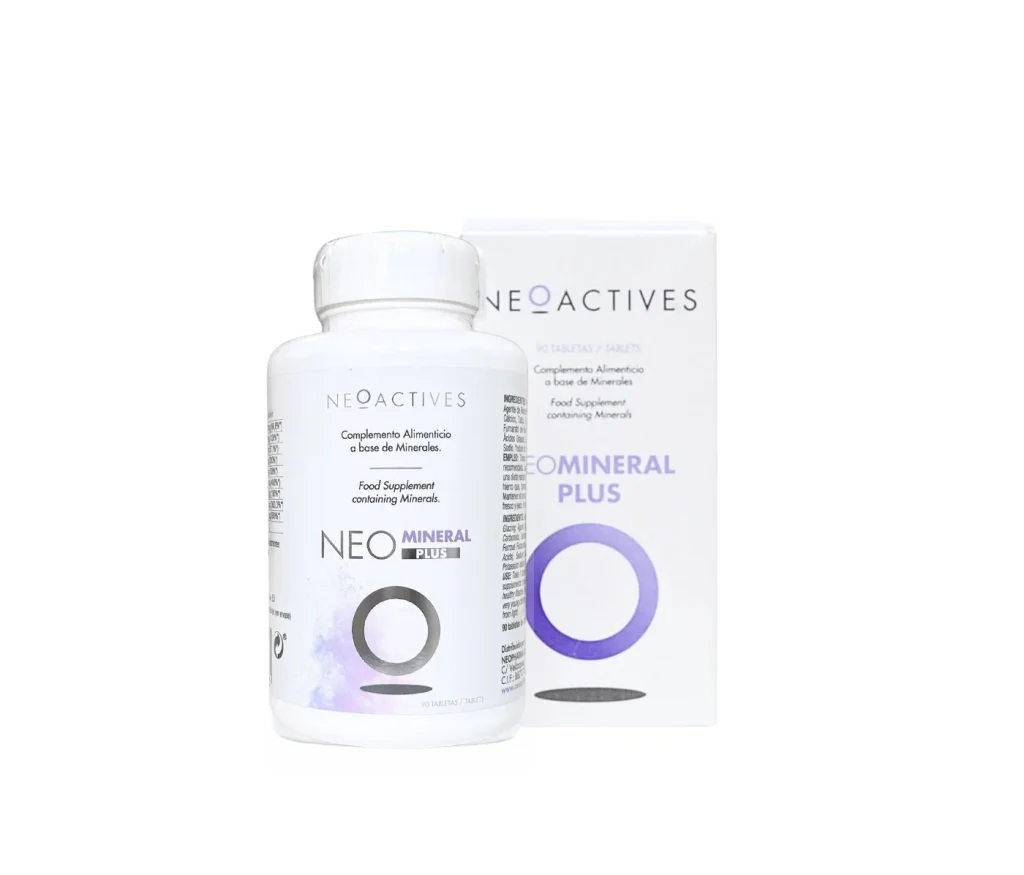
NeoMineral Plus is an advanced nutritional food supplement providing minerals and trace elements in a single daily tablet. Within Neolife, it complements the vitamin foundation with cofactors involved in energy metabolism, immunity, oxidative stress, thyroid function, glucose metabolism, oxygen transport and structural support.
The formulation contains magnesium bisglycinate, zinc citrate, selenium as L-selenomethionine, chromium picolinate and other minerals and trace elements. The aim is to provide an organized and traceable mineral foundation, rather than treating a specific disease in isolation.
Magnesium deserves specific consideration. NeoMineral Plus provides 250 mg of magnesium bisglycinate, a relevant amount within a multimineral formulation. This intake should be understood as part of the product’s overall strategy and not as a specific magnesium treatment. When the primary clinical goal is to optimize magnesium intake, combining it with NeoMagnesium may be considered.
The indication should be individualized based on its iron, iodine and selenium content. For example, in patients with hemochromatosis, elevated ferritin or iron overload, a multimineral supplement containing iron should not be used automatically. Similarly, thyroid conditions should be assessed according to the clinical context and the individual’s overall iodine and selenium intake.
In practice, a basic assessment may include a complete blood count, ferritin, transferrin saturation, kidney function, TSH and free T4, glucose and HbA1c, with additional parameters depending on the individual case. It is also important to review potential duplication and possible interactions with levothyroxine, bisphosphonates, tetracyclines or quinolones.
Conclusion
Minerals are essential micronutrients for maintaining cellular function and are involved in processes as important as energy production, immune response, thyroid function, oxidative balance, and muscle and bone health. Their importance in Healthy Aging is physiologically clear, although the evidence that mineral supplementation on its own can extend longevity is much more limited.
The most reasonable approach is to start with a varied, high-quality diet and use supplementation on an individualized basis when there is insufficient intake, increased demand or a clinical context that justifies it. In this setting, a well-formulated multimineral supplement can be a useful tool for optimizing overall nutritional status.
NeoMineral Plus follows this approach through a combination of minerals and trace elements in highly bioavailable forms, designed as a multimineral foundation within a comprehensive preventive medicine and longevity strategy. The goal is not to identify a single nutrient capable of modifying the aging process, but rather to support an appropriate nutritional environment in which the physiological systems that sustain health can function as efficiently as possible.
LITERATURE
(1) López-Otín C, Blasco MA, Partridge L, Serrano M, Kroemer G. The Hallmarks of Aging. Cell. 2013;153(6):1194-1217.
(2) López-Otín C, Blasco MA, Partridge L, Serrano M, Kroemer G. Hallmarks of Aging: An Expanding Universe. Cell. 2023;186(2):243-278.
(3) Franceschi C, Garagnani P, Parini P, Giuliani C, Santoro A. Inflammaging: a new immune-metabolic viewpoint for age-related diseases. Nat Rev Endocrinol. 2018;14:576-590.
(4) Gröber U, Schmidt J, Kisters K. Magnesium in Prevention and Therapy. Nutrients. 2015;7:8199-8226.
(5) de Baaij JHF, Hoenderop JGJ, Bindels RJM. Magnesium in Man: Implications for Health and Disease. Physiol Rev. 2015;95:1-46.
(6) Prasad AS. Zinc in Human Health: Effect of Zinc on Immune Cells. Mol Med. 2008;14:353-357.
(7) Rayman MP. Selenium and Human Health. Lancet. 2012;379:1256-1268.
(8) Camaschella C. Iron Deficiency. N Engl J Med. 2015;372:1832-1843.
(9) Gombart AF, Pierre A, Maggini S. A Review of Micronutrients and the Immune System. Nutrients. 2020;12:236.
(10) Ames BN. Optimal micronutrients delay mitochondrial decay and age-associated diseases. Mech Ageing Dev. 2010;131:473-479.
(11) Manson JE, Bassuk SS. Vitamin and Mineral Supplements: What Clinicians Need to Know. JAMA. 2018;320(9):979-980.