




In 1970, an expedition to Greenland gave rise to the legend of omega-3 as a cardioprotective nutrient. Half a century later, science has taken decades to fully test it.
In the 1970s, Bang and Dyerberg linked the Inuit’s high-fat diet to their supposedly low cardiovascular risk. In 2014, it was revealed that they had never actually measured this incidence: they had relied on unreliable Greenlandic records. The founding myth of omega-3 was based, at least in part, on an assumption that had never been properly verified.
Dr. Carlos Martí – Neolife Medical Team
From an expedition to Greenland to a $1.1 billion industry
In the summer of 1970, two Danish researchers, Hans Olaf Bang and Jørn Dyerberg, travelled to the northwest coast of Greenland to investigate a medical mystery: the Inuit, whose diet was rich in seal and whale fat, appeared to experience very few heart attacks. That expedition gave rise to one of the most widely repeated nutritional recommendations of the past half-century — eating oily fish, or supplementing with fish oil, protects the heart — and laid the foundations for what is now an industry generating more than $1.1 billion in the United States alone.
What the legend leaves out is that, in 2014, a review published in the Canadian Journal of Cardiology compiled 48 subsequent studies on the cardiovascular health of the Inuit and concluded that their prevalence of coronary heart disease is actually similar to — or even higher than — that of the reference Caucasian population. Bang and Dyerberg never directly measured the incidence of heart attacks: they relied on annual reports from Greenland’s chief medical officer, a source that the reviewers themselves considered unreliable for a dispersed population with limited access to healthcare.
Although the original fieldwork had methodological gaps that took decades to identify, Bang and Dyerberg’s observations were not without value: their blood analyses did show a favourable lipid profile among the Inuit, and that finding — well supported by evidence, unlike the heart-attack figures — fuelled decades of biochemical research into EPA and DHA, including their role in platelet aggregation, endothelial function and systemic inflammation.
The distinction matters: the part of the story that withstood scientific scrutiny was not “the Inuit hardly ever suffer heart attacks,” but rather “EPA and DHA have real, measurable biological effects on the cardiovascular system.” This solid biochemical foundation eventually gave rise to an entire supplementation market, which in Spain has now become one of the best-selling product categories in pharmacies, parapharmacies and health-food stores.

What modern clinical trials have taken 50 years to answer
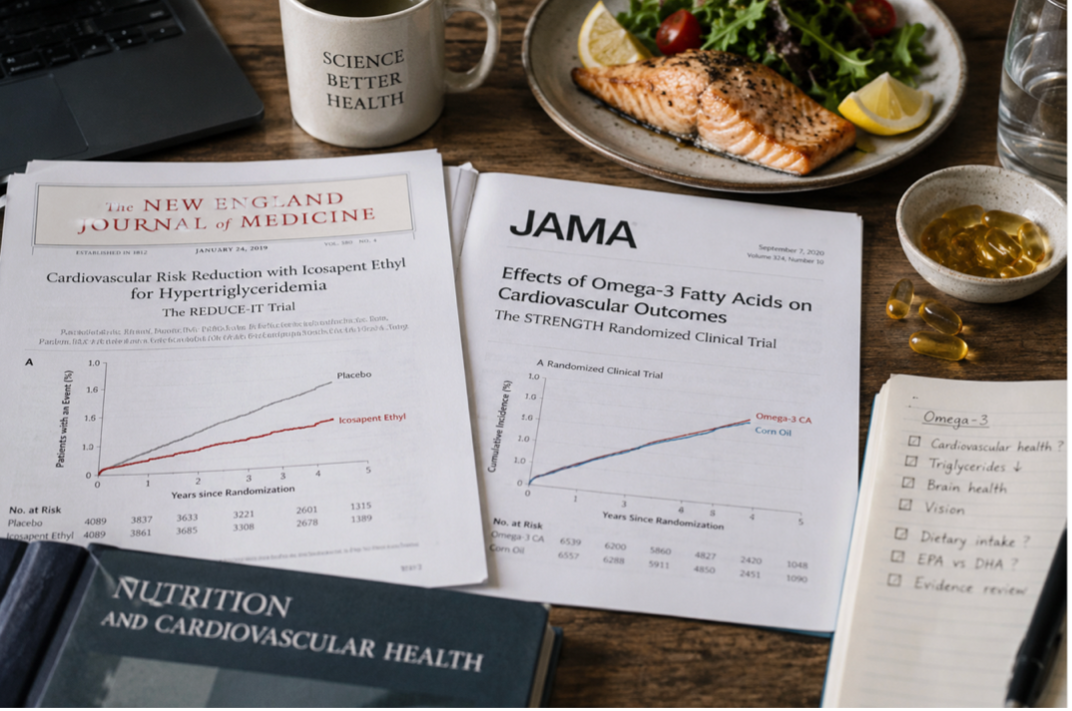
The question that Bang and Dyerberg left unresolved with sufficient scientific rigour — does omega-3 actually reduce the risk of heart attack and stroke? — has, half a century later, received a much more sophisticated and considerably less comfortable answer than the original legend suggested. Two major clinical trials using pharmacological doses (4 grams per day) have produced opposing results in recent years: REDUCE-IT (2019), using pure, purified EPA, found a significant reduction in major cardiovascular events among high-risk patients. STRENGTH (2020), using the same combination of EPA and DHA found in most over-the-counter supplements, found no benefit and was stopped early for lack of efficacy.
The scientific community continues to debate the reasons for this discrepancy — ranging from the type of placebo used in each trial to the possibility that DHA may attenuate EPA’s cardioprotective effects — but there is broader agreement on one point: the promise of “heart-attack prevention” repeated by many over-the-counter supplements does not have the same level of support today that it had a decade ago, when the Inuit legend was still widely accepted without sufficient qualification.
Between myth and uncertainty: what the evidence does support
Beyond the more controversial cardiovascular debate, there is an area in which the evidence surrounding EPA and DHA is solid and does not depend on any Greenlandic legend: the EFSA has authorised health claims based on consistent physiological evidence for the maintenance of normal cardiac function, from 250 mg/day of combined EPA+DHA, and for the maintenance of normal brain function and vision, from 250 mg/day of DHA. The reduction of triglyceride levels with high doses (2,000–4,000 mg/day, already within the pharmacological range) is, alongside these two authorised claims, one of the best-supported uses across the omega-3 supplement category.
The common mistake is not taking omega-3 for these reasons — they have a genuine scientific basis — but extrapolating this evidence to the broader and less well-supported promise of universal cardiovascular prevention precisely the part of the story that originated from data that had never been properly verified.
The question that really matters today: are we eating enough fish?
Regardless of the debate surrounding heart-attack prevention, there is one fact that does not depend on any controversial clinical trial: how much omega-3 we actually consume. The ANIBES study, a reference survey on dietary intake in Spain, found in 2023 that the average daily intake of EPA among the Spanish population was just 30 mg, while DHA intake was 60 mg — 90 mg combined, compared with the 250–500 mg consistently recommended by EFSA and most international scientific societies. The same study found that 65% of the adult population does not meet recommended fish consumption levels, particularly among younger people.
By far, this is the least controversial scientific argument in the entire article: regardless of the ultimate outcome of the cardiovascular debate, most of the Spanish population starts from a dietary omega-3 intake that is well below recommended levels — something that no review has called into question.
A half-truth myth, a real argument
Fifty years after that expedition to Greenland, omega-3 still has a real argument in its favour — a documented dietary gap and well-supported health claims — while having lost, at least in part, the myth that originally made it famous. It is a good example of how a story can be partially wrong at its origin and still point towards something true: the Inuit narrative turned out to have less scientific basis than initially believed, but the biochemical interest it generated has, decades later, produced much more rigorous evidence — with its own strengths and limitations — about what EPA and DHA can and cannot actually achieve.
At Neolife, we assess omega-3 supplementation within the context of each patient’s diet and biomarkers, rather than as an automatic recommendation or as a promise of universal prevention.
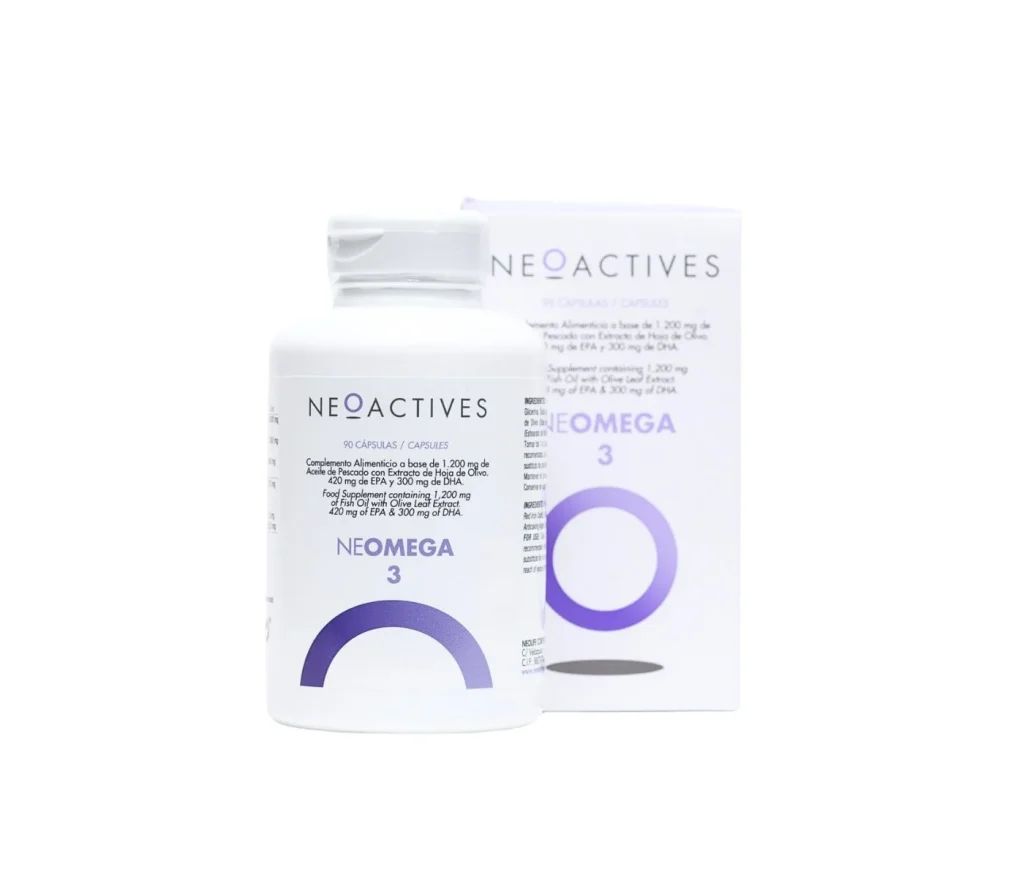
When appropriate, we offer NeOmega 3, which combines EPA and DHA at clearly defined doses with olive leaf extract for additional antioxidant support — designed as a maintenance foundation, not as a substitute for a diet containing sufficient oily fish.
BIBLIOGRAPHY
(1) Bang HO, Dyerberg J, Nielsen AB. Plasma lipid and lipoprotein pattern in Greenlandic West-coast Eskimos. Lancet. 1971;1(7710):1143-1146. doi: 10.1016/s0140-6736(71)91658-8.
(2) Fodor JG, Helis E, Yazdekhasti N, Vohnout B. “Fishing” for the origins of the “Eskimos and heart disease” story: facts or wishful thinking? Can J Cardiol. 2014;30(8):864-868. doi: 10.1016/j.cjca.2014.04.007.
(3) Nicholls SJ, Lincoff AM, Garcia M, et al. Effect of High-Dose Omega-3 Fatty Acids vs Corn Oil on Major Adverse Cardiovascular Events in Patients at High Cardiovascular Risk: The STRENGTH Randomized Clinical Trial. JAMA. 2020;324(22):2268-2280. doi: 10.1001/jama.2020.22258.
(4) Redruello-Requejo M, Samaniego-Vaesken ML, Puga AM, Montero-Bravo A, Ruperto M, Rodríguez-Alonso P, Partearroyo T, Varela-Moreiras G. Omega-3 and Omega-6 Polyunsaturated Fatty Acid Intakes, Determinants and Dietary Sources in the Spanish Population: Findings from the ANIBES Study. Nutrients. 2023;15(3):562. doi: 10.3390/nu15030562.