




Vitamin D3 supplementation, including doses of up to 4,000 IU/day in selected patients, has emerged as a safe and effective strategy to correct deficiency and preserve musculoskeletal health during aging.
Vitamin D deficiency remains highly prevalent, even in Mediterranean countries. The latest evidence supports an individualized approach to supplementation, highlighting that doses of up to 4,000 IU/day may be necessary to achieve optimal 25(OH)D concentrations in certain patients. Beyond its well-established role in bone metabolism, vitamin D is increasingly recognized as an important contributor to healthy aging.
Dr. Mireia Junyent – Neolife Medical Team
Why Is Vitamin D Deficiency Still So Common?
Despite the abundant sunlight typical of Mediterranean regions, vitamin D insufficiency continues to represent a significant public health issue. A substantial proportion of adults have inadequate 25-hydroxyvitamin D levels, particularly older adults, individuals with obesity, gastrointestinal disorders, limited sun exposure, or darker skin phototypes.
Aging reduces the skin’s ability to synthesize vitamin D, increasing the risk of chronic insufficiency that may negatively affect musculoskeletal health and physical function.
Recent meta-analyses consistently show that conventional supplementation doses (600–800 IU/day) may be insufficient to achieve adequate serum levels in patients with risk factors, reinforcing the importance of personalized supplementation strategies.
4,000 IU/Day: An Evidence-Based Dose
Current recommendations emphasize that the optimal vitamin D dose should be tailored to each individual’s characteristics. Multiple clinical trials and systematic reviews have demonstrated that supplementation with 4,000 IU/day of cholecalciferol (vitamin D3) is more effective at correcting vitamin D deficiency than standard doses, particularly in patients with obesity, older age, or malabsorption.
This regimen has been shown to provide:
- A greater likelihood of achieving serum 25(OH)D concentrations > 30 ng/mL.
- Improved response in patients with increased volume of distribution or reduced bioavailability.
- An excellent safety profile when prescribed and monitored by healthcare professionals.
- No clinically significant increase in hypercalcemia in the available studies.
The most recent clinical practice guidelines consider 4,000 IU/day to be the upper tolerable intake level for healthy adults and a commonly used dosage in vitamin D deficiency correction protocols before transitioning to a maintenance regimen.
Vitamin D and Healthy Aging: Beyond Bone Health
Over the past decade, vitamin D has evolved from being viewed solely as a regulator of calcium and phosphorus metabolism to becoming an important component of longevity medicine.
Aging is associated with a progressive decline in muscle mass, immune system changes, and a chronic low-grade inflammatory state known as inflammaging. Within this context, maintaining adequate vitamin D levels may help preserve musculoskeletal function and support healthy aging.
The strongest evidence supports benefits in:
- Maintaining muscle strength and physical function.
- Reducing the risk of frailty.
- Preserving mobility in older adults.
- Optimizing bone health and reducing the risk of osteomalacia.
Although several studies have linked adequate vitamin D levels with improved immune function, lower systemic inflammation, and better cardiometabolic health, current evidence does not support recommending vitamin D supplementation specifically as an intervention to slow biological aging or extend lifespan.
From a clinical perspective, correcting vitamin D deficiency should therefore be considered a strategy to optimize overall health and functional capacity rather than an “anti-aging” treatment.
At Neolife, we offer NeoVit D3, a high-quality vitamin D3 supplement formulated to help maintain optimal vitamin D levels. Our medical team can assess your individual needs and recommend the most appropriate supplementation strategy based on your clinical profile.
BIBLIOGRAPHY
(1) Demay MB, et al. Vitamin D for the Prevention of Disease: An Endocrine Society Clinical Practice Guideline. J Clin Endocrinol Metab.
(2) Bouillon R. Vitamin D and Healthy Aging. Nature Reviews Endocrinology.
(3) Ortiz-Prado E, et al. Cholecalciferol (vitamin D3): efficacy, safety and implications in public health. Front Nutr.
(4) Ogorek AN, Samara VA. New Clinical Practice Guidelines for Vitamin D Supplementation and Testing. Clin Chem.
(5) Goswami C, et al. Are there prophylactic effects of vitamin D among healthier adults? A systematic review of randomized controlled trials. BMC Nutrition.
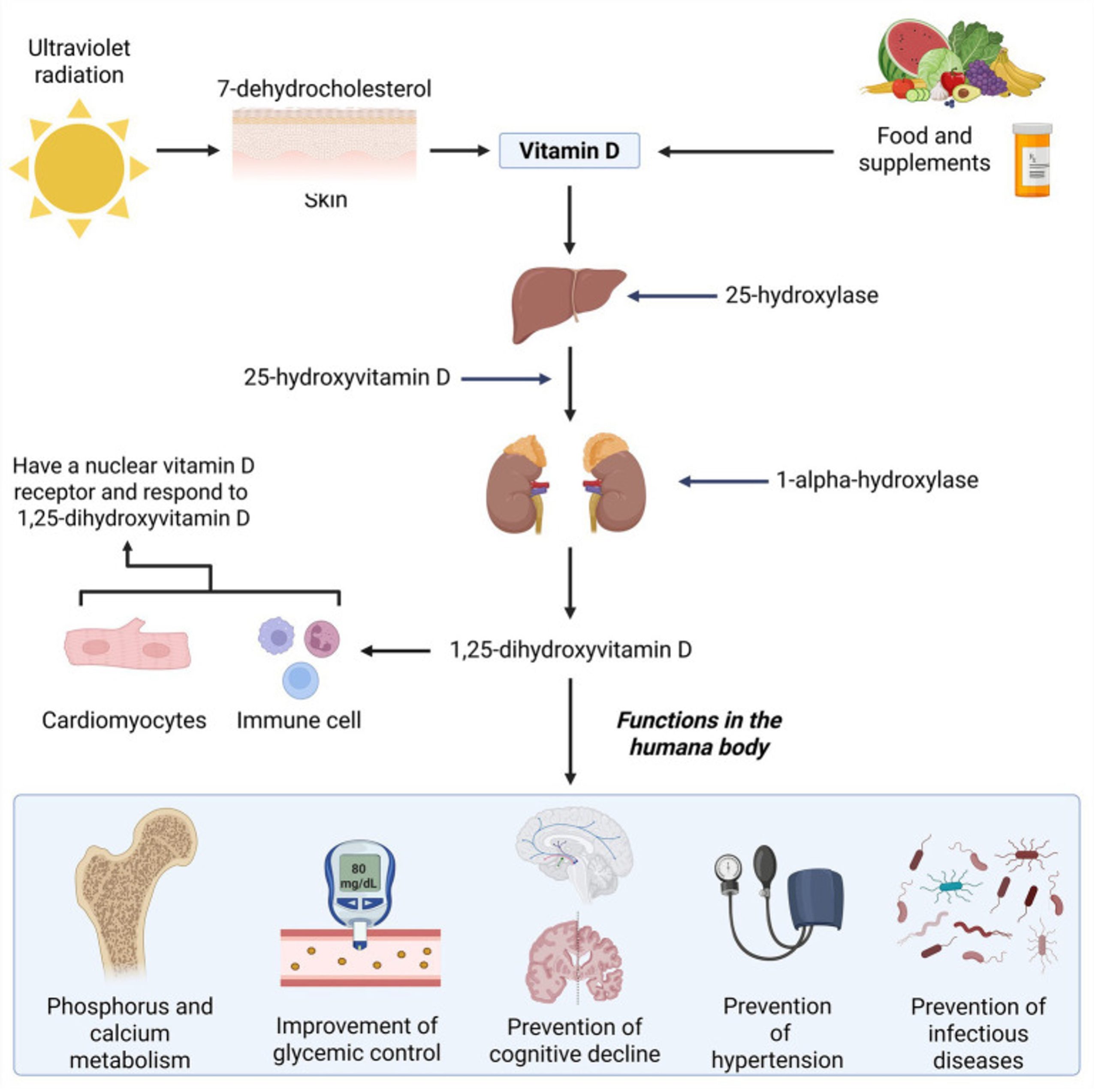
(6) Figura 1. Metabolismo de la vitamina D y formación de 25(OH)D y calcitriol. Adaptado de Ortiz-Prado et al. Front Nutr. 2025 (CC BY).