




An essential molecule for mitochondrial function, particularly relevant to ageing, cardiovascular health and certain clinical conditions.
Coenzyme Q10 plays a fundamental role in cellular energy production and protection against oxidative stress. Its levels may decline with age, certain diseases and some pharmacological treatments, which has increased interest in its supplementation in the fields of medicine and longevity.
Dr. Marta López Tomás – Neolife Medical Team
What is coenzyme Q10 and why is it important?
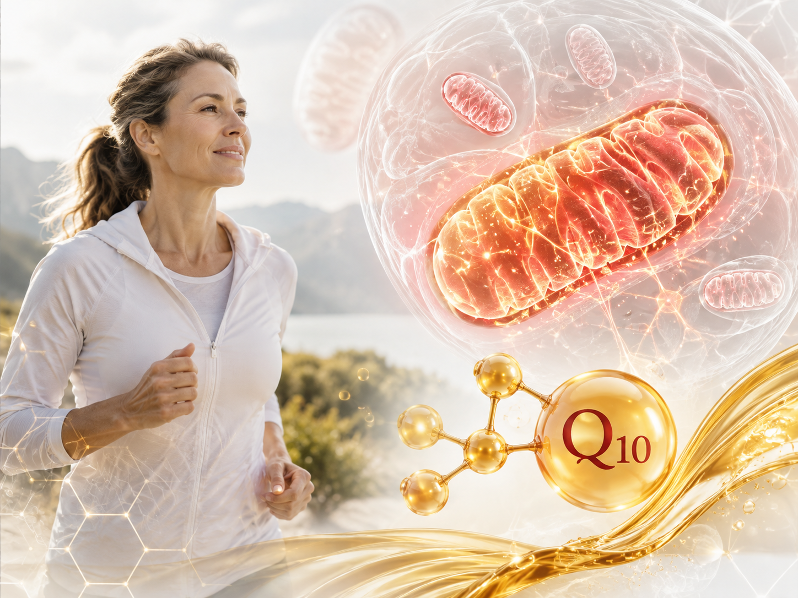
Coenzyme Q10, or CoQ10, is a fat-soluble substance naturally present in virtually all cells in the body. Its main function takes place in the mitochondria, where it participates in the electron transport chain and contributes to the production of ATP, the molecule that provides energy to cells.
Tissues with high energy demands, such as the heart, brain and skeletal muscle, contain particularly high concentrations of CoQ10. In addition, in its reduced form — ubiquinol — it acts as an antioxidant and helps protect cell membranes, lipids and the mitochondria themselves against oxidative damage.
Coenzyme Q10, ageing and longevity
Ageing is associated with progressive changes in mitochondrial function, energy production and antioxidant capacity. Although the body can synthesise CoQ10, its levels may decrease with age and may also be altered in certain chronic diseases, situations involving increased oxidative stress or with certain pharmacological treatments.
This does not mean that CoQ10 supplementation can stop ageing. Its relevance within longevity medicine lies in supporting two processes that are essential for healthy ageing: efficient cellular energy production and balance against oxidative stress.
In which situations has supplementation been studied?
- Fatigue, vitality and mitochondrial function
Coenzyme Q10 has been studied as a potential support for people experiencing fatigue or reduced exercise tolerance. Some studies have observed an improvement in perceived fatigue, although results may vary depending on the underlying cause of fatigue, the dose used and the duration of supplementation.
Before turning to a supplement, it is important to determine whether fatigue may be caused by other common factors, such as anaemia, thyroid disorders, sleep problems, nutritional deficiencies, inflammatory diseases or side effects of certain medications.
- Antioxidant protection and low-grade inflammation
As cells produce energy, they also generate small amounts of substances that can damage them. The body has defence mechanisms to neutralise these substances, but when these mechanisms are insufficient, so-called oxidative stress occurs, a process associated with cellular ageing and various chronic diseases.
Ubiquinol, one of the forms of coenzyme Q10, helps protect cells against this damage and works alongside other antioxidant systems in the body. Some studies also suggest that it may contribute to improving certain markers associated with inflammation.
- Cardiovascular health
The heart requires a great deal of energy to function properly, which is why coenzyme Q10 has attracted interest in the cardiovascular field. In some patients with heart failure, its use as an adjunct to standard treatment has been associated with improved exercise capacity and fewer hospital admissions.
However, these findings apply to specific patient groups and do not mean that coenzyme Q10 can prevent or treat cardiovascular disease on its own. Its use should always be assessed individually and under medical supervision.
- Muscle function and statin treatment
Statins, which are used to lower cholesterol, may also reduce coenzyme Q10 levels in the body. It has been suggested that this effect could be related to the muscle pain, fatigue or weakness that some people experience during treatment.
Several studies have found improvement with supplementation. Therefore, coenzyme Q10 may be considered on an individual basis in certain patients, but it should never replace treatment or be used as a reason to stop or change a statin without medical supervision.
- Migraine and exercise
Mitochondrial dysfunction and oxidative stress have also been associated with migraine. Some studies suggest that CoQ10 may reduce the frequency or duration of attacks in certain individuals and may be used as a complementary preventive strategy.
During exercise, muscles need to produce large amounts of energy. Coenzyme Q10 participates in this process and also helps protect cells against the oxidative stress that increases during intense or prolonged exercise.
For this reason, its supplementation has been studied in athletes and physically active individuals. Some studies suggest that it may support recovery, reduce certain markers of muscle damage and slightly improve the ability to perform intense exercise.
Ubiquinone and ubiquinol: not all formulations are the same
In dietary supplements, CoQ10 is mainly available in two forms:
- Ubiquinone: the oxidised form, traditionally used in many supplements. The body can convert it into ubiquinol.
- Ubiquinol: the reduced and directly antioxidant form. Some formulations have been shown to produce higher blood concentrations, particularly in older adults.
The difference between products does not depend solely on whether they contain ubiquinone or ubiquinol. The quality and traceability of the raw material, ingredient stability, dosage and formulation system also play a role. As it is fat-soluble, CoQ10 is generally better absorbed when incorporated into a fat-based matrix or a formulation designed to promote its solubilisation.
Who might benefit most?
- Adults from middle age onwards, when endogenous production may decline.
- People with high physical or metabolic demands.
- Patients experiencing fatigue, after ruling out possible medical causes.
- Some people taking statins who experience muscle-related symptoms.
- People with recurrent migraine, as part of an individualised preventive strategy.
- Patients with certain cardiovascular conditions, always under medical guidance and monitoring.
Not everyone needs supplementation, and not everyone will experience the same benefits. The indication should be integrated into an overall assessment that takes into account diet, exercise, sleep, body composition, medication and clinical status.
How should it be taken and what precautions should be considered?
As it is a fat-soluble substance, CoQ10 is generally recommended with a meal, preferably breakfast or lunch. In some people, it may be advisable to avoid taking it immediately before bedtime if it causes a subjective feeling of increased alertness.
CoQ10 is generally well tolerated. Reported adverse effects are usually mild and include digestive discomfort, nausea, diarrhoea, reduced appetite, headache or insomnia.
It should be used with caution in people taking vitamin K antagonist anticoagulants, such as warfarin or acenocoumarol, and its use should be monitored in patients taking antihypertensive or antidiabetic medications or multiple medications. During pregnancy, breastfeeding or in the presence of chronic diseases, it is advisable to consult a healthcare professional beforehand.
Coenzyme Q10 as part of Neolife’s supplementation approach
At Neolife, coenzyme Q10 supplementation is recommended on an individualised basis, taking into account age, symptoms, metabolic status, medication and each person’s goals.
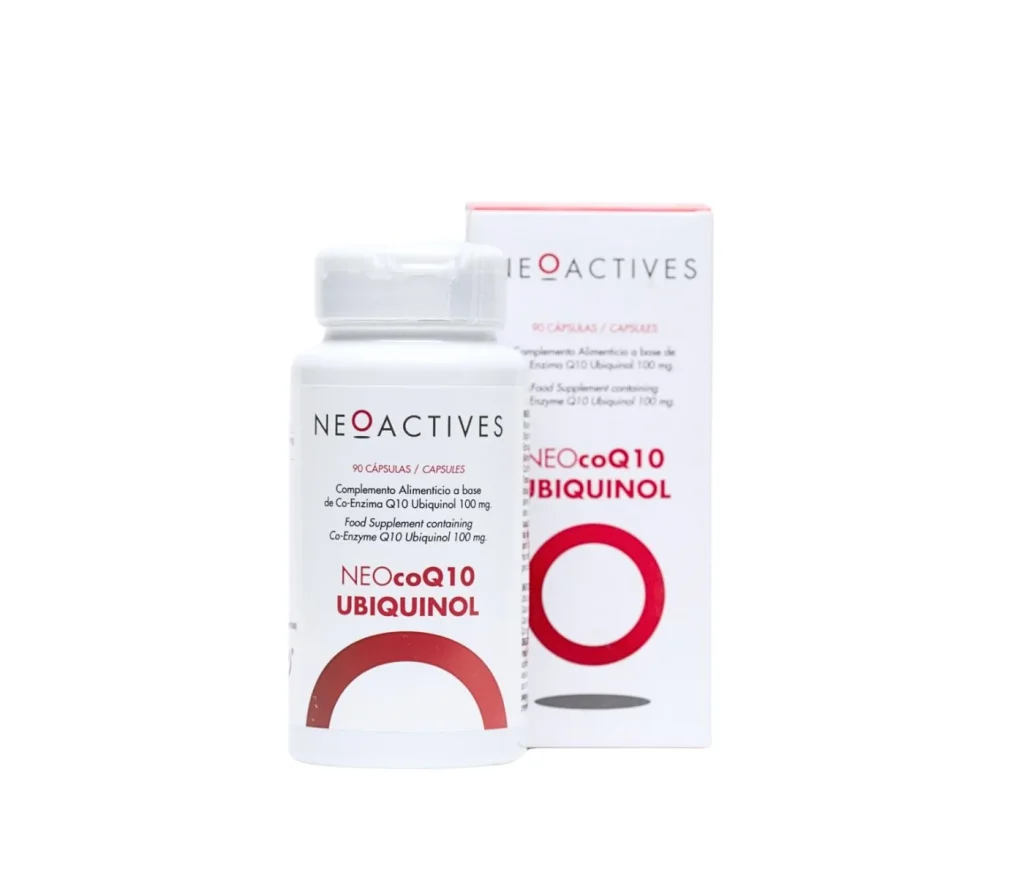
Within the Neoactives range, NeoCoQ10 contains ubiquinol and a lipid matrix adapted to the fat-soluble nature of the molecule. The use of an identified and traceable raw material, together with a formulation designed to preserve its stability and promote its absorption, is a relevant consideration when selecting a high-quality supplement.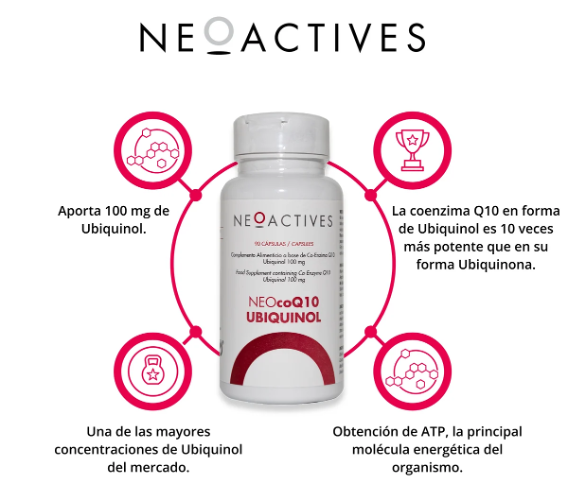
Supplementation should be considered as part of a comprehensive health and longevity strategy that includes exercise, nutrition, adequate rest, cardiovascular risk-factor management, metabolic health and individualised medical follow-up.
Conclusion
Coenzyme Q10 is an essential molecule for mitochondrial energy production and cellular antioxidant balance. Its supplementation has been studied in relation to fatigue, oxidative stress, low-grade inflammation, cardiovascular health, migraine, exercise and statin-associated muscle symptoms.
The strongest evidence supports its biological role in mitochondrial and antioxidant function. Potential clinical benefits depend on the population, dose, treatment duration and formulation used. Therefore, the decision to supplement should be individualised and form part of a broader medical and lifestyle approach.
BIBLIOGRAPHY
(1) Guerra RM, Pagliarini DJ. Coenzyme Q biochemistry and biosynthesis. Trends Biochem Sci. 2023;48(5):463-476.
(2) Pravst I, et al. Comparative bioavailability of different coenzyme Q10 formulations in healthy elderly individuals. Nutrients. 2020;12(3):784.
(3) Schulz C, et al. Comparison of the relative bioavailability of different coenzyme Q10 formulations with a novel solubilizate formulation. Arzneimittelforschung. 2006;56(12):787-793.
(4) Tsai IC, et al. Effect of coenzyme Q10 supplementation on fatigue: a systematic review and meta-analysis of randomized controlled trials. Front Pharmacol. 2022;13:883251.
(5) Fan L, et al. Effects of coenzyme Q10 supplementation on inflammatory markers: a systematic review and meta-analysis of randomized controlled trials. Pharmacol Res. 2017;119:128-136.
(6) Varnousfaderani SD, et al. Alleviating effects of coenzyme Q10 supplements on biomarkers of inflammation and oxidative stress: results from an umbrella meta-analysis. Front Pharmacol. 2023;14:1192932.
(7) Akbari A, et al. The effects of coenzyme Q10 supplementation on oxidative stress parameters: a systematic review and meta-analysis of clinical trials. Eur J Clin Pharmacol. 2020;76:1483-1499.
(8) Mortensen SA, et al. The effect of coenzyme Q10 on morbidity and mortality in chronic heart failure: results from Q-SYMBIO, a randomized double-blind trial. JACC Heart Fail. 2014;2(6):641-649.
(9) Qu H, et al. Effects of coenzyme Q10 on statin-induced myopathy: an updated meta-analysis of randomized controlled trials. J Am Heart Assoc. 2018;7:e009835.
(10) Taylor BA, et al. A randomized trial of coenzyme Q10 in patients with confirmed statin myopathy. Atherosclerosis. 2015;238(2):329-335.
(11) Banach M, et al. The effect of statin treatment on circulating coenzyme Q10 concentrations: an updated meta-analysis of randomized controlled trials. Mol Nutr Food Res. 2015;59:1237-1244.
(12) Sazali S, et al. Coenzyme Q10 supplementation for prophylaxis in adult patients with migraine: a meta-analysis. BMJ Open. 2021;11:e039358.
(13) Parohan M, et al. Effect of coenzyme Q10 supplementation on clinical features of migraine: a systematic review and dose-response meta-analysis of randomized controlled trials. Nutr Neurosci. 2020;23(11):868-875.
(14) de Sousa Fernandes MS, et al. Coenzyme Q10 supplementation in athletes: a systematic review. Nutrients. 2023;15(18):3990.
(15) Kaneka Nutrients. Kaneka Ubiquinol™ ingredient information, manufacturing formats and stability documentation.